
Whoa Adventure
Joy Nice GamesRole Playing
4.7360.00 Reviews
- Version
- 1.16.4
- Installs
- 500.00K
- Age Rating
- Everyone
Screenshots




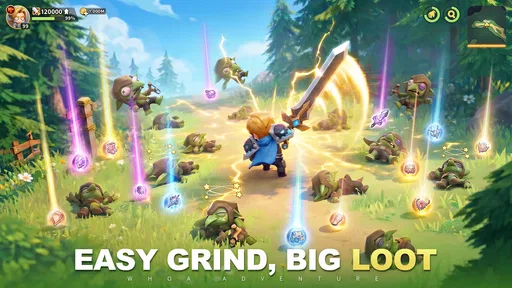
Our Review of Whoa Adventure
 Analysis by Appyee
Whoa Adventure is the kind of role-playing game I would try when I want a classic fantasy journey without committing to a complicated setup. It is an MMORPG from Joy Nice Games, presented as a free-to-play adventure for everyone. After spending time with it, my impression is that its appeal comes less from trying to reinvent online role-playing and more from offering a familiar adventure framework that is easy to pick up, socially oriented, and built for players who enjoy returning to the same world regularly.
The first thing I noticed is that the game asks for a particular kind of patience. Its store summary points toward the legacy of classic adventure, and that description fits the general mood: this is not aimed at someone who wants a short puzzle session or a purely offline story. The experience makes more sense when I treat it as a continuing game, something to open repeatedly rather than finish in one sitting. Whoa Adventure works best as a steady routine, not as a one-time download for a quick burst of action.
Its public reception is encouraging, with a 4.7 average from around 21 thousand ratings and more than 500 thousand installs. Those figures suggest that the game has found a real audience, although popularity alone does not tell me whether its pace or online structure will suit every player. The important question is whether you enjoy the habits that come with an MMORPG: checking progress, managing your time, and accepting that the most satisfying results usually come from consistent play.
How the adventure feels during ordinary play
I find ordinary play most rewarding when I arrive with one small aim rather than expecting every visit to feel like a major event. That makes it easier to notice whether the ongoing adventure suits my routine, and it gives me a natural way to judge the game beyond its opening impression. The next section looks at what changes when a casual check-in turns into a longer session.
A familiar fantasy rhythm rather than instant spectacle
My first sessions felt approachable because the game does not need to be understood as a complex simulation before it becomes enjoyable. The role-playing format gives me a clear reason to keep moving forward, while the MMORPG identity changes the way I judge progress. I am not only asking whether one battle is exciting; I am also considering whether the broader journey gives me enough reason to return tomorrow.
That distinction matters for speed. The game can feel quick when I have a clear objective and only a short session available, but an online role-playing structure naturally creates moments where progress feels more measured. I would not recommend it to someone expecting every minute to deliver a dramatic event. Its better quality is continuity: small actions can feel worthwhile when they contribute to a longer adventure.
The classic-adventure positioning also sets my expectations differently from a highly experimental role-playing game. I am more willing to accept familiar patterns here, because the attraction is recognition and comfort. Players who already like traditional fantasy MMORPGs will probably understand the intended rhythm quickly. Players who need constant novelty may find the same familiarity less exciting after the initial curiosity fades.
What makes short sessions practical
I found the game easier to approach when I divided play into simple goals instead of trying to do everything at once. A short visit can be used to advance one task, improve a character, or check the next stage of the journey. This is a useful habit for mobile play because it prevents the game from turning into an unplanned time sink.
One practical tip is to decide before opening the game whether the session is for progress or exploration. If I start without that decision, an MMORPG can encourage me to keep moving from one activity to another long after I intended to stop. Setting a small target makes the experience feel faster, even when the underlying pace has not changed. It also helps me judge whether the game is giving me meaningful progress or simply keeping me busy.
The reverse is true when I have a longer break. That is when the online adventure format becomes more attractive, because I can settle into the world instead of rushing through it. The game is therefore more flexible than its simple store wording suggests, but the player has to provide some structure. It does not automatically turn every spare minute into a perfectly efficient session.
Where the free-to-play model affects decisions
Whoa Adventure is free to download and play, but it includes optional purchases ranging from $0.29 to $99.99 per item. That wide range is important for how I approach the game. I would start without spending anything, learn its normal rhythm, and only then decide whether a purchase genuinely improves my experience rather than buying out of impatience.
This is not just a budgeting point. In a continuing role-playing game, spending can change how I think about progress. If I am always comparing ordinary advancement with paid shortcuts or extras, the adventure can begin to feel like a shopping decision instead of a game. My advice is to set a personal limit before playing and treat purchases as optional conveniences, not as part of the basic entry requirement.
That approach is especially useful for families, even though the content rating is Everyone. An age rating describes suitability of content, not a child’s ability to understand optional spending. If a younger player uses the game, I would keep purchase controls under adult supervision. The game may be appropriate for a broad audience while still requiring sensible boundaries around in-app purchases.
How it compares with other mobile role-playing choices
Compared with a single-player role-playing game, this one is a better fit if the idea of a shared, ongoing world is part of the attraction. I like having a reason to return, but I also accept that an MMORPG can feel less self-contained. A traditional offline adventure is usually better when I want a tightly controlled story, uninterrupted progress, and no concern about the wider online environment.
Compared with a faster action-focused mobile RPG, Whoa Adventure appears more comfortable with the classic journey than with constant visual intensity. That can be a strength on a device where I want a longer-lasting game rather than a short reflex challenge. It can also be a weakness if my priority is immediate combat impact or a very rapid reward cycle.
The most useful comparison is therefore not “which game has more content,” but “which routine do I actually want?” I would choose this one for a persistent adventure I can revisit. I would choose a simpler offline game for travel with unreliable connectivity, and a more action-heavy title when I want every session to feel urgent.
Heavy-use moments, stability, and recovery
When I play for longer, I pay attention not just to the game but to the phone and connection around it; those can shape comfort as much as the adventure itself. A simple pause before switching apps, followed by a calm reconnection if needed, is more useful than repeatedly tapping through a stalled moment. From there, I consider how to make the experience dependable across ordinary sessions.
What happens when a session becomes demanding
Longer sessions are where I pay more attention to the practical side of a mobile MMORPG. A game can feel pleasant during a brief check-in but become less comfortable when I stay for a full break. With Whoa Adventure, I would plan demanding play around the condition of the phone rather than assuming that every device will handle extended use in exactly the same way.
Several factors can make a mobile game feel heavier even without a dramatic technical problem: a bright display, sustained network activity, background applications, and a phone that already has limited free storage or memory. I cannot treat the game as equally light on every handset. My own sensible workflow is to close unused applications, keep the device reasonably charged, and avoid judging the game during a moment when the phone is already overloaded.
This is one of the less obvious trade-offs of an online role-playing game. The world may be designed for repeated play, but repeated play also exposes the limits of the device. A short session can hide those limits. A long session reveals them through warmth, battery decline, or slower transitions. That does not automatically make the game poorly optimized; it means the playing environment matters more than it would for a tiny offline title.
Handling interruptions without losing the evening
Mobile play is full of interruptions. Calls, messages, commuting, weak connections, and accidental app closures are all normal. I would not begin an important stretch of play in Whoa Adventure if I knew I might need to leave immediately. The safer habit is to finish a clear step before switching away, then return when I have enough time to reorient myself.
Recovery is also a question of patience. If the game needs to reconnect or reload after an interruption, repeatedly tapping the screen usually does not help. I prefer to wait briefly, check the connection, and reopen the game cleanly if necessary. That small routine avoids turning one interruption into several failed attempts and gives the app a better chance to restore the session properly.
For everyday use, this means the game fits best into predictable breaks. A lunch break at home, an evening on stable Wi-Fi, or a relaxed weekend session is a better match than a crowded commute with an unreliable signal. I would still try it during travel, but I would not make it my only game for situations where connection recovery is likely to be a constant problem.
Why stability matters more than a flashy first impression
An MMORPG earns my trust through consistency. I care less about one impressive opening session than about whether the game remains comfortable after repeated launches. The current version is 1.16.4, and keeping the app updated is a sensible first step whenever performance or recovery feels unusual. Updates can also change the way a game behaves, so I would avoid drawing a permanent conclusion from one brief visit.
My practical test is simple: launch it several times under normal conditions, play both a short and a longer session, and see whether the experience remains predictable. I pay attention to whether returning after an interruption feels straightforward, whether the game keeps my place, and whether the phone remains responsive outside the app. These observations are more useful than assuming that a high rating guarantees identical stability on every model.
The rating is still meaningful as a sign that many people enjoy the overall product. However, ratings tend to combine opinions about gameplay, presentation, support, and personal expectations. They are not a device-by-device performance guarantee. I would use the 4.7 average as encouragement to try the game, not as a promise that it will run perfectly on older hardware.
Storage, operating system, and hardware choices
The minimum operating system is Android 5.1, which gives the game a broad compatibility range on paper. That does not mean every phone running that system will offer the same experience. Operating-system compatibility is only the starting point; available memory, free storage, connection quality, and the age of the handset can still influence loading and responsiveness.
If your phone is older, I would approach the game with realistic expectations. Keep some storage available, remove applications you no longer use, and avoid playing while several demanding apps are active. These are not glamorous tips, but they matter more than changing a single setting when a device is close to its limits.
On a newer phone, I would still avoid assuming that an MMORPG is automatically harmless to battery life. Persistent online games ask the device to maintain more than a basic offline puzzle would. If battery life is your main concern, shorter sessions and lower screen brightness are sensible compromises. The better choice may be a lighter offline role-playing game if you often play away from a charger.
Who should install it, and who should skip it
I would recommend Whoa Adventure to someone who enjoys classic fantasy role-playing, likes returning to a continuing world, and does not mind that progress may feel gradual. It is also suitable for a player who wants a free starting point before deciding whether the MMORPG format deserves regular space on the phone.
I would be more cautious with someone who wants a complete, self-contained story, a purely offline experience, or fast action in every session. The game is also not my first recommendation for a player who dislikes optional purchases on principle. Even when spending is not required for initial access, the presence of purchases can affect how some people experience progression.
For parents, the Everyone rating makes the game broadly accessible from a content perspective, but I would still explain the difference between playing for free and buying optional items. For a casual adult player, I would suggest trying it during a stable evening session rather than judging it during a rushed commute. For a dedicated MMORPG player, I would compare its familiar adventure approach with the deeper systems and more specialized communities found in established alternatives before making it a main game.
Three habits that make the experience better
My first useful habit is to create a stopping point. Before a session, I choose one objective and stop when it is complete unless I genuinely have more time. This keeps the game from taking over an evening and makes gradual progress feel intentional.
My second is to separate experimentation from spending. I would test the free experience long enough to understand what I enjoy, then consider whether an inexpensive purchase solves a real annoyance. The upper end of the purchase range is substantial, so I would never treat a large item as a casual impulse buy.
My third is to use the phone as part of the performance setup. I close background apps, keep the operating system current, maintain free storage, and play on a reliable connection whenever possible. If the game feels slow, I first check those conditions before deciding that the title itself is the problem. This simple diagnostic habit prevents a lot of unfair conclusions.
My performance verdict after weighing the trade-offs
Whoa Adventure leaves me with a positive but measured opinion. Its strongest quality is the accessible classic-adventure identity: I can understand the attraction quickly, and the MMORPG structure gives regular players a reason to return. The free entry point lowers the risk of trying it, while the broad Everyone rating makes it approachable for a wide audience.
Its limitations are tied to the same design. The continuing online format is less convenient than an offline game when the connection is poor or time is limited. The pace may feel too gradual for players who need constant intensity, and the in-app purchase range means I would play with a clear budget rather than making decisions emotionally. Device age and session length can also affect comfort, so I would not promise identical performance across all phones.
Joy Nice Games has made a role-playing game that I see as a good companion for steady, repeat play rather than a universal replacement for every mobile RPG. I would install it if I wanted a familiar online adventure and had a reasonably capable device with dependable connectivity. I would skip it in favor of an offline alternative if my priority were guaranteed access anywhere, or choose a faster action game if I wanted immediate excitement above all else.
Overall, my recommendation is to begin modestly: play for free, use short sessions to learn the rhythm, and judge the game by how naturally it fits your daily routine. The strong reception and substantial player base make it worth exploring, but the best experience comes from knowing what you are signing up for. If you want a persistent classic-style adventure and can accept gradual progress, Whoa Adventure is an easy game to give a fair trial.
Verdict
Strengths of Whoa Adventure
- Bright, colorful visuals make exploration appealing on smaller phone screens.
- Simple controls are easy to learn, even for younger or casual players.
- Short stages fit well into quick gaming sessions.
- Collectibles and hidden areas encourage replaying completed levels.
- The lighthearted presentation makes it suitable for family-friendly play.
Limitations of Whoa Adventure
- Some sections may feel repetitive after extended play sessions.
- Progress can depend on precise timing, which may frustrate beginners.
- The interface may feel cramped on phones with smaller displays.
- Limited variety in challenges can reduce long-term appeal for experienced players.
- Performance and loading times may vary across older devices.
Other Releases by Joy Nice Games
View All


Similar Picks in This Category
View All
Hair Dye
CrazyLabs LTD4.4

Monster High™ Beauty Salon
CrazyLabs LTD4.5

Bus Simulator - Bus Games 3D
Jima Apps4.4

Flight Pilot: 3D Simulator
Wildlife Studios4.1


Super Stylist Fashion Makeover
CrazyLabs LTD4.4
Frequently Asked Questions
What is Whoa Adventure, and what kind of gameplay does it offer?
Whoa Adventure is an action-adventure game focused on exploration, movement, challenges, and progression. Players typically guide a character through colorful environments, overcome obstacles, collect useful items, and complete objectives while discovering new areas. Its appeal comes from combining accessible controls with increasingly demanding situations, making it suitable for casual players while still offering enough variety to keep adventure and platform-game fans interested.
Is Whoa Adventure suitable for children and younger players?
Whoa Adventure appears designed to be approachable, with bright visuals and gameplay that is generally easy to understand. However, parents should still check the game’s age rating, advertising policy, in-app purchase options, and privacy information before allowing children to play. Difficulty, online features, and external links can vary by version, so reviewing the current store listing and device settings is recommended.
Does Whoa Adventure require an internet connection to play?
Whether Whoa Adventure can be played completely offline may depend on the version and the feature being used. Basic gameplay may work without a constant connection, but advertisements, cloud saves, updates, account services, or other online functions can require internet access. If you plan to play while traveling or with limited data, test the installed version offline before relying on it.
Are there advertisements or in-app purchases in Whoa Adventure?
Before downloading Whoa Adventure, users should review the official Google Play or App Store listing for details about advertising and optional purchases. Many free mobile games use ads to support development and may offer items, upgrades, extra attempts, or ad removal through in-app transactions. Check the purchase settings carefully, especially on shared family devices, and avoid spending money unless the transaction is clearly understood.
What devices are compatible with Whoa Adventure, and how much storage does it need?
Compatibility can change as the game receives updates, so the safest approach is to confirm the requirements shown on the official store page for your Android or iOS device. In addition to the listed download size, leave extra free storage for installation files, cached content, and future updates. A reasonably modern device with updated software should provide the best performance, loading times, and stability.
Play our best games!


